

Lecturer of the heatflow.summerschool 2026

Graeme Beardsmore
University of Melbourne, Australia
Graeme Beardsmore is a Senior Fellow in Crustal Heat Flow at the University of Melbourne. He received his PhD in Geophysics from Monash University in 1996. Between 1996 and 1998 he furthered his heat flow studies at the Changsha Institute of Geotectonics (Changsha, Hunan Province, China) and Southern Methodist University (Dallas TX, USA). After returning to Monash University, he wrote “Crustal Heat Flow: A Guide to Measurement and Modelling” published by Cambridge University Press in 2001. Since 2003 he has applied his heat-flow knowledge and expertise in the search and characterisation of geothermal energy resources. He has a particular interest in developing new instruments and techniques, and in standardising prevailing practices. Examples of the former include a digital electronic divided bar for measuring thermal conductivity, and ‘Heat Needles’ for monitoring heat flow through the top metre of the Earth.
Selected publications:
- Sass J.H. and Beardsmore G., 2021. Heat Flow Determinations, Continental. In: Gupta H.K. (ed.), Encyclopedia of Solid Earth Geophysics, Encyclopedia of Earth Sciences Series. Springer, Cham. https://doi.org/10.1007/978-3-030-58631-7_72. 7pp.
- Harvey, C., Beardsmore, G.R., Rueter, H. and Moeck, I., 2016—Geothermal Exploration: Global Strategies and Applications. IGA Academic Books. 198pp. ISBN 978-3-9818045-0-8
- Beardsmore, G.R. and Cull, J.P., 2001—Crustal heat flow: A guide to measurement and modelling. Cambridge University Press. 321pp. ISBN: 978-0-5217970-3-0.

Elif Balkan-Pazvantoglu
Geophysical Engineering, Dokuz Eylul University, Izmir, Turkey
Elif Balkan-Pazvantoglu received her Ph.D. in Geophysical Engineering from Dokuz Eylul University, Izmir Turkey in 2017. Her research interest concentrates on Geothermic studies with a particular focus on the heat flow, thermal structure, and geothermal regime of the continental lithosphere. This involved investigating the thermal properties of rocks and their significance in regional geodynamic processes through the use of numerical modelling to analyze heat transfer within the Earth. She is also interested in paleoclimate studies in boreholes to determine regional-scale climate changes.
Selected publications:
- Thermal conductivity of major rock types in western and central Anatolia regions, Turkey; E Balkan, K Erkan, M Şalk; Journal of Geophysics and Engineering 14
- Fuchs, S., Norden, B., Neumann, F., Kaul, N., Tanaka, A., Kukkonen, I. T., Pascal, C., Christiansen, R., Gola, G., Šafanda, J., Espinoza-Ojeda, O. M., Marzan, I., Rybach, L., Balkan-Pazvantoğlu, E., Ramalho, E. C., Dědeček, P., Negrete-Aranda, R., Balling, N., Poort, J., Wang, Y., Jõeleht, A., Rajver, D., Gao, X., Liu, S., Harris, R., Richards, M., McLaren, S., Chiozzi, P., Nunn, J., Madon, M., Beardsmore, G., Funnell, R., Duerrast, H., Jennings, S., Elger, K., Pauselli, C., Verdoya, M. (2023): Quality-assurance of heat-flow data: The new structure and evaluation scheme of the IHFC Global Heat Flow Database. - Tectonophysics, 863, 229976. https://doi.org/10.1016/j.tecto.2023.229976
- A portable borehole temperature logging system using the four-wire resistance method, K Erkan, B Akkoyunlu, E Balkan, M Tayanç, Journal of Geophysics and Engineering 14 (6), 1413-1419
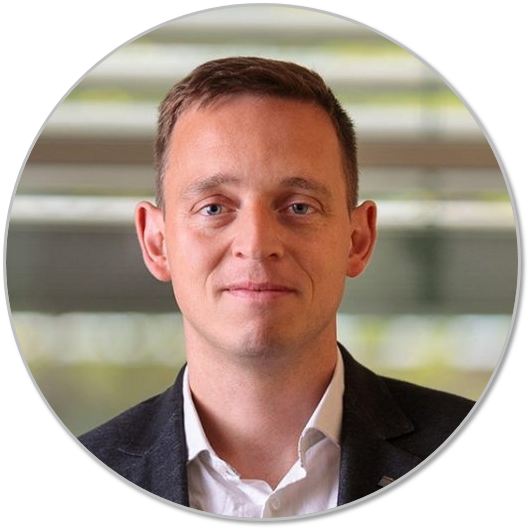
Sven Fuchs
GFZ Helmholtz Centre for Geosciences, Germany
Sven's research interests focus on the Earths thermal field and its relevance for geodynamic processes as well as for the technological utilization of the subsurface (exploration of resources, geothermal production, geological storage of energy and waste, etc.). This includes detailed studies of the heat flow evolution and associated rock thermal properties, considering the effects of geoscientific processes across scales and times. He integrates geological data on various scales with geophysical surveys from boreholes (well-log interpretation) and surface (seismic data) as well as with data from laboratory studies of rock physics and chemistry into numerical models. Since 2019, he is the elected custodian of the IHFC Global Heat Flow Database.
Selected publications:
- Global Heat Flow Data Assessment Group et al. (2024): The Global Heat Flow Database: Release 2024. https://doi.org/10.5880/fidgeo.2024.014
- Fuchs, S., Förster, A. and Norden, B., 2022. Evaluation of the terrestrial heat flow in Germany: A case study for the reassessment of global continental heat-flow data. Earth-Science Reviews, p.104231. https://doi.org/10.1016/j.earscirev.2022.104231.
- Fuchs, S., Norden, B., Neumann, F., Kaul, N., Tanaka, A., Kukkonen, I. T., Pascal, C., Christiansen, R., Gola, G., Šafanda, J., Espinoza-Ojeda, O. M., Marzan, I., Rybach, L., Balkan-Pazvantoğlu, E., Ramalho, E. C., Dědeček, P., Negrete-Aranda, R., Balling, N., Poort, J., Wang, Y., Jõeleht, A., Rajver, D., Gao, X., Liu, S., Harris, R., Richards, M., McLaren, S., Chiozzi, P., Nunn, J., Madon, M., Beardsmore, G., Funnell, R., Duerrast, H., Jennings, S., Elger, K., Pauselli, C., Verdoya, M. (2023): Quality-assurance of heat-flow data: The new structure and evaluation scheme of the IHFC Global Heat Flow Database. - Tectonophysics, 863, 229976. https://doi.org/10.1016/j.tecto.2023.229976

Kamil Erkan
Marmara University, Türkiyie
Assoc. Prof. Dr. Kamil Erkan is a geoscientist whose research focuses on the thermal structure of the continental crust, heat-flow determination, and geothermal systems. He received his Ph.D. in Earth Sciences from Southern Methodist University (USA) and conducted postdoctoral research at The Ohio State University. His work integrates temperature–depth data, thermal conductivity measurements, and geophysical observations to estimate surface heat flow, assess geothermal resource potential, and investigate paleoclimate signals recorded in boreholes.
Selected publications:
- Understanding the Chena Hot Springs, Alaska, geothermal system using temperature and pressure data from exploration boreholes, K Erkan, G Holdmann, W Benoit, D Blackwell, Geothermics 37 (6), 565-585 https://doi.org/10.1016/j.geothermics.2008.09.001
- Geothermal investigations in western Anatolia using equilibrium temperatures from shallow boreholes K Erkan Solid Earth 6 (1), 103-113 https://doi.org/10.5194/se-6-103-2015
- Relationship between geodetically derived dilatation rates and the high-temperature geothermal systems in Türkiye K Erkan, S Burhan Journal of Geophysics and Engineering 22 (2), 652-661 https://doi.org/10.1093/jge/gxaf032
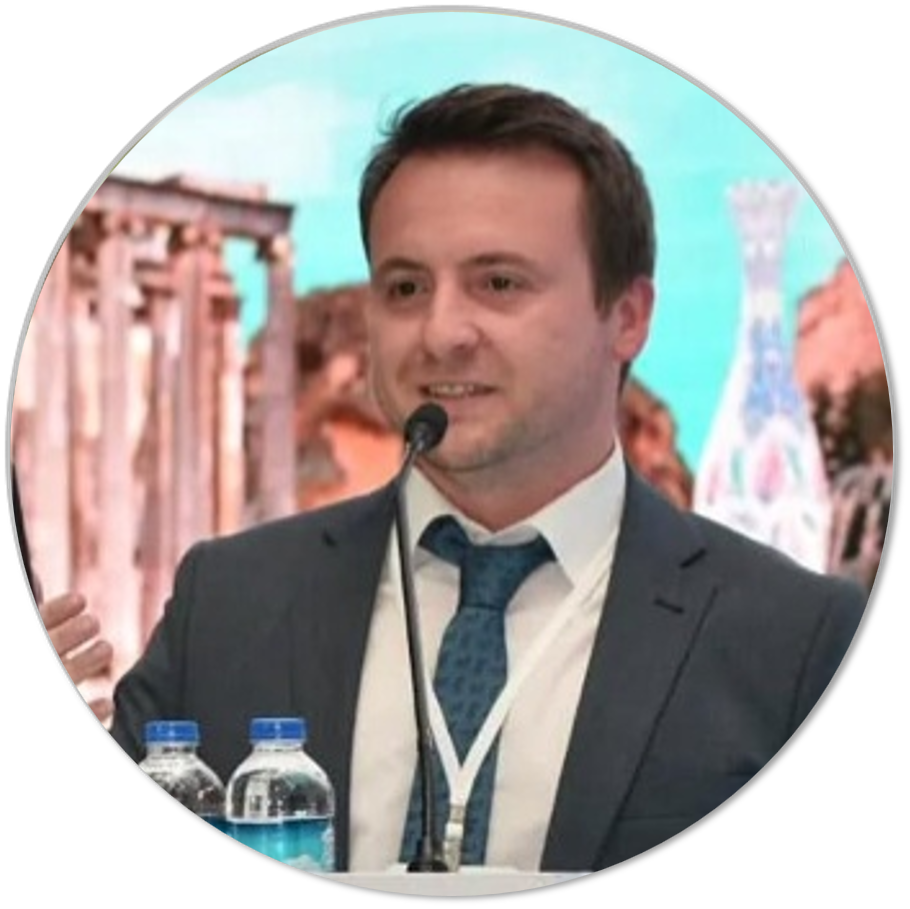
Taygun Uzelli
Izmir Institute of Technology, Türkiyie
Assoc. Prof. Dr. Taygun Uzelli is a geological engineer specializing in geothermal systems, tectonics, and numerical modeling. He received his Ph.D. in Geological Engineering from Hacettepe University in 2019. He is currently affiliated with the Geothermal Energy Research and Application Center (GEOCEN), İzmir Institute of Technology (IZTECH), Türkiye, and has recently completed postdoctoral research at Newcastle University (2024–2025). His research interests include geothermal system characterization, structural controls on fluid flow, GIS-based analysis, and the conceptual modeling of subsurface geology.
Selected publications:
- Conceptual model of the Gülbahçe geothermal system, Western Anatolia, Turkey: based on structural and hydrogeochemical data, T Uzelli, A Baba, GG Mungan, RK Dirik, H Sözbilir Geothermics 68, 67-85 https://doi.org/10.1016/j.geothermics.2017.03.003
- Distribution of geothermal arsenic in relation to geothermal play types: A global review and case study from the Anatolian plate (Turkey) A Baba, T Uzelli, H Sozbilir, Journal of Hazardous Materials, 125510, https://doi.org/10.1016/j.jhazmat.2021.125510
- Hydrogeology and hydrogeochemistry of the geothermal systems and its direct use application: Balçova-Narlıdere geothermal system, İzmir, Turkey, A Baba, H Sözbilir, T Sayık, S Arslan, T Uzelli, S Tonkul, MM Demir, Geothermics 104, 102461
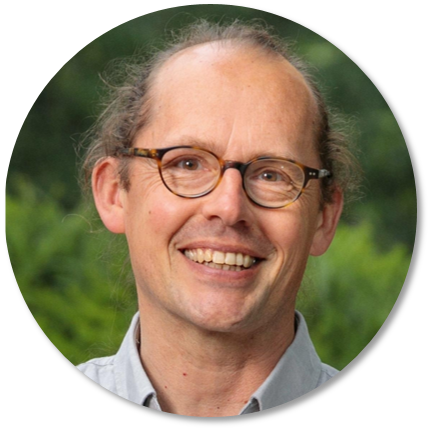
Ben Norden
GFZ Helmholtz Centre for Geosciences, Germany
Dr. Ben Norden is a structural and exploration geologist at GFZ Potsdam, where he leads the “Exploration Geology” group in the Geoenergy section. His work focuses on the geological and petrophysical characterization of the subsurface, integrating field, borehole, and lab data into structural and thermal models. With expertise in parametric modelling and thermal–hydraulic simulation, he supports geothermal energy development and heat flow analysis. He also teaches at the University of Potsdam and TU Hamburg. In the summer school, he will contribute insights on modelling and interpreting subsurface thermal data.
Selected publications:
- Norden, B., Bauer, K., Krawczyk, C. (2023): From pilot knowledge via integrated reservoir characterization to utilization perspectives of deep geothermal reservoirs: the 3D model of Groß Schönebeck (North German Basin). - Geothermal Energy, 11, 1. https://doi.org/10.1186/s40517-022-00242-2
- Norden, B., Förster, A., Förster, H.-J., Fuchs, S. (2020): Temperature and pressure corrections applied to rock thermal conductivity: impact on subsurface temperature prognosis and heat-flow determination in geothermal exploration. - Geothermal Energy, 8, 1. https://doi.org/10.1186/s40517-020-0157-0GFZPublicVolltext (PDF)
- Norden, B., Frykman, P. (2013): Geological modelling of the Triassic Stuttgart Formation at the Ketzin CO2 storage site, Germany. - International Journal of Greenhouse Gas Control, 19, 756-774. https://doi.org/10.1016/j.ijggc.2013.04.019